Commercial roofing · Tri-Cities, WA
TPO roofing for hot, windy Tri-Cities roofs
A heat-welded, reflective single-ply membrane that handles hot Tri-Cities summers and keeps cooling loads down.
Chapter 01
What a Tri-Cities summer does to a flat roof
A dark membrane in July sun gets far hotter than the air above it, and that heat goes two places: into the building, where the cooling system has to fight it, and into the roof itself, where daily swings from afternoon heat to cool night air keep stretching and relaxing the material. Over enough cycles the weak points open. Usually that is a seam, a corner or a detail around a rooftop unit.
Wind is the other half of the story. The Tri-Cities is known for it, and a large flat roof gives wind a lot to work on. It finds loose edges, tired fasteners and perimeter flashing that was never tied in properly. A roof system for this region has to be reflective enough to stay cooler and secure enough at the edges to stay put.
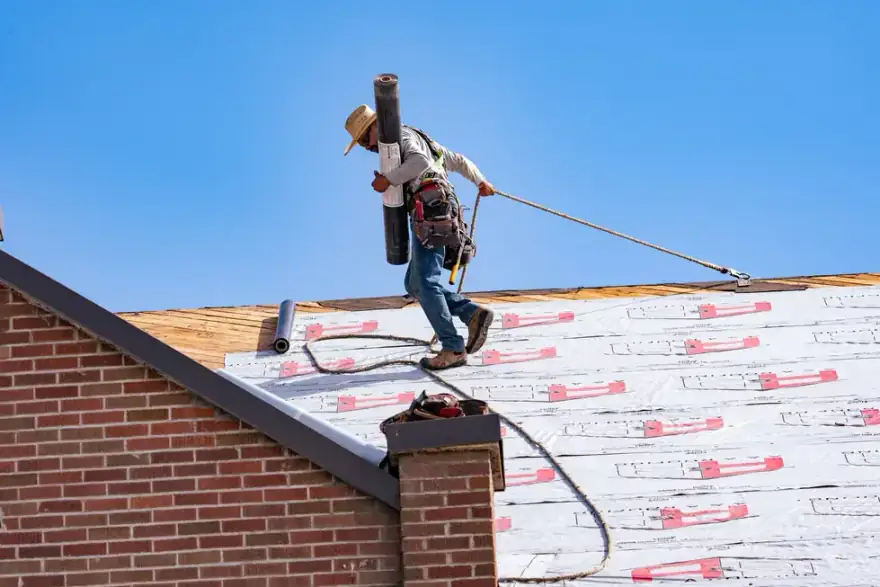
Roofer rolling out white roofing membrane under a clear sky
Heat-welded seams on a white membrane
TPO is a single-ply membrane that arrives in wide sheets. Our crew joins the sheets with hot-air welding, which fuses the overlap into one continuous surface instead of relying on a glued strip to hold. A good weld depends on clean material, the right temperature and a steady hand, which is why every seam gets checked before the crew moves on. The white surface reflects sunlight, so the roof absorbs less heat, and the membrane resists UV, punctures and tears.
We start with a consultation and a look at the property, then help you choose the membrane color and thickness that suits the building. Whether the sheet is mechanically fastened or adhered depends on the deck, the insulation beneath it and how exposed the building is to wind. The job ends with a quality inspection of the finished system, not just a sweep of the site.
Chapter 03
Keeping a TPO roof working
TPO needs little maintenance, but little is not none. Walk it after a big storm. Look at the seams around penetrations, check the drains and the flashing at walls and curbs, and keep an eye out for punctures from dropped tools or service visits. A film of dirt also cuts into the reflectivity that makes the roof worth having, so a rinse now and then helps.
If something does go wrong, small repairs on a welded membrane are quick when they are caught early and much more expensive when water has reached the insulation. Our team handles TPO repairs as well as new installs, and regular inspections are the cheapest way to make sure the repair stays small.
A&A Roofing Services. Licensed and insured, WA L&I ROOFIRS798DE. Call 509-440-2428.