Wind Took Shingles Off Your Roof: The First 48 Hours
What to do, in order, when a windstorm leaves shingles in the yard and questions on the roof.
September 30, 2026 · 4 min read
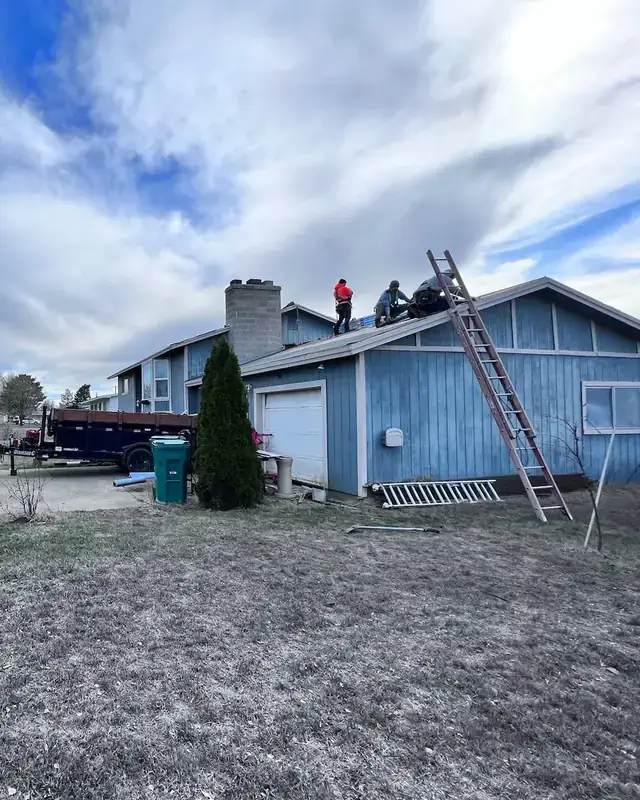
Wind in the Tri-Cities rarely leaves a neat, obvious mess. Some mornings it is a pile of shingles in the flower bed. Other times it is a single lifted tab, a ridge cap hanging on one nail, or a strip of exposed underlayment you only notice from the street. What you do in the first 48 hours decides whether a wind problem stays a repair or turns into a leak, a stained ceiling and a much bigger job.
Hour one: stay off the roof and look from the ground
The first job is safety, and it does not involve a ladder. Wet, wind-loosened shingles, loose flashing and a steep pitch are a bad combination, and plenty of storm-cleanup injuries happen when a homeowner climbs up for a quick look. Walk around the house instead. Check the yard, the driveway and the neighbor's lot for shingles, ridge caps, pieces of metal flashing and branches. Look along the roofline from each side, using binoculars or the zoom on your phone.
Then go inside. If you can reach the attic safely through a hatch or from a fixed ladder, look for daylight where there should be none, damp insulation, dark stains on the underside of the roof deck and any dripping. Check the ceilings and upper walls for fresh brown or yellow marks. If water is actively coming in, set out buckets, move furniture and electronics out of the way, and call for emergency help instead of waiting for the weather to pass.
Photograph everything before you move anything
Photos are the cheapest protection you will ever have, for repairs and for any insurance conversation that follows. Before you start cleaning up, take wide shots of each side of the house, then close shots of each piece of damage. Photograph interior stains with something in the frame for scale, and write down the date and time.
- Wide shots of every side of the house, taken from the ground
- Close shots of missing shingles, lifted tabs, bent flashing and exposed underlayment
- Debris in the yard, left where it fell until you have photographed it
- Ceiling, wall and attic stains, with the date noted
- Any fallen branches or trees, and what they struck
Cover the opening, but do not improvise on the roof
A tarp is meant to keep water out for days or a couple of weeks. It does not repair anything. A properly installed tarp is anchored beyond the damaged area, carried over the ridge where needed, and fastened with battens to the deck, not just a few nails through the fabric. A poorly installed one flaps in the next gust, pulls more shingles loose and lets water in anyway. That is why temporary cover is worth handing to a crew that does it every week.
A Kennewick-area review shows how fast this can go. Jenna Long wrote that after wind damaged her roof, Roy had a contractor out the same day to cover the damaged area with a tarp. Whoever you call, ask about same-day cover when you describe the damage. Keep any receipt and every photo of the work, because many policies ask you to take reasonable steps to prevent further damage. Read your own policy for the exact wording.
When to call, and what to ask
Call the same day if water is entering the house, if you can see bare decking or underlayment, or if a large section of shingles is gone. If the damage looks minor, a few missing tabs for example, call within a day or two, because even a small opening lets water work under the neighboring shingles the next time it rains.
A&A Roofing Services offers 24/7 emergency help, so a storm that hits at night or over a weekend is not a reason to wait. Whoever you call, ask whether they will inspect the whole roof or only the spot you pointed at, and whether the inspection is free.
What a proper wind inspection covers
Wind damage often hides in places you did not look. A thorough inspection goes past the obvious gap and works through the whole roof system.
- Shingle condition across every slope, including creased, lifted or unsealed tabs
- Ridge and hip caps, which catch the wind first
- Flashing at chimneys, walls, skylights and valleys
- Vents, pipe boots and exhaust caps that may have been cracked or knocked loose
- Underlayment and decking wherever shingles are missing
- Gutters, fascia and soffit, which take hits from flying debris
- The attic and ceilings, for moisture the exterior does not show
You should leave with photos, a plain description of what was found and a written scope for the repair. If all you hear is that you need a new roof, with nothing shown to back it up, ask for more detail.
Insurance notes for the first 48 hours
Wind damage is a common reason homeowners contact their insurer, but policies differ in what they cover, in deductibles and in how they treat older roofs. Nothing here is a promise that a claim will be paid. Read your policy, find your deductible, and contact your agent or carrier soon after the event, since some policies set time limits for reporting. Keep your photos, tarp receipts and any inspection report together in one folder.
If wind has been at your roof, A&A Roofing Services in Kennewick offers free roof inspections and storm damage repair, with 24/7 emergency help when it cannot wait. Call 509-440-2428 and tell them what you found.
A&A Roofing Services, 509-440-2428
Call 509-440-2428More articles
Roof Insurance Claims in Washington, Step by Step
From the first photo to the final repair, here is how a roof claim usually moves and where homeowners lose time.
Metal or Architectural Shingle for an Eastern Washington Home
Both can be a good roof here. The right one depends on your house, your priorities and how you weigh upfront cost against long-term use.